Hot Jobs This Autumn: Where Opportunities Are Growing in the UK

Georgia Gilbert • 29 September 2025

Autumn is always such an exciting time at Regional Recruitment. As we head into the festive season, some departments really start to thrive and if you’re looking for work, or even just curious about where opportunities are growing, now’s the perfect time to take a closer look.


Our logistics and industrial departments are always the busiest at this time of year. And honestly, it’s easy to see why.

Logistics: The Festive Season in Full Swing

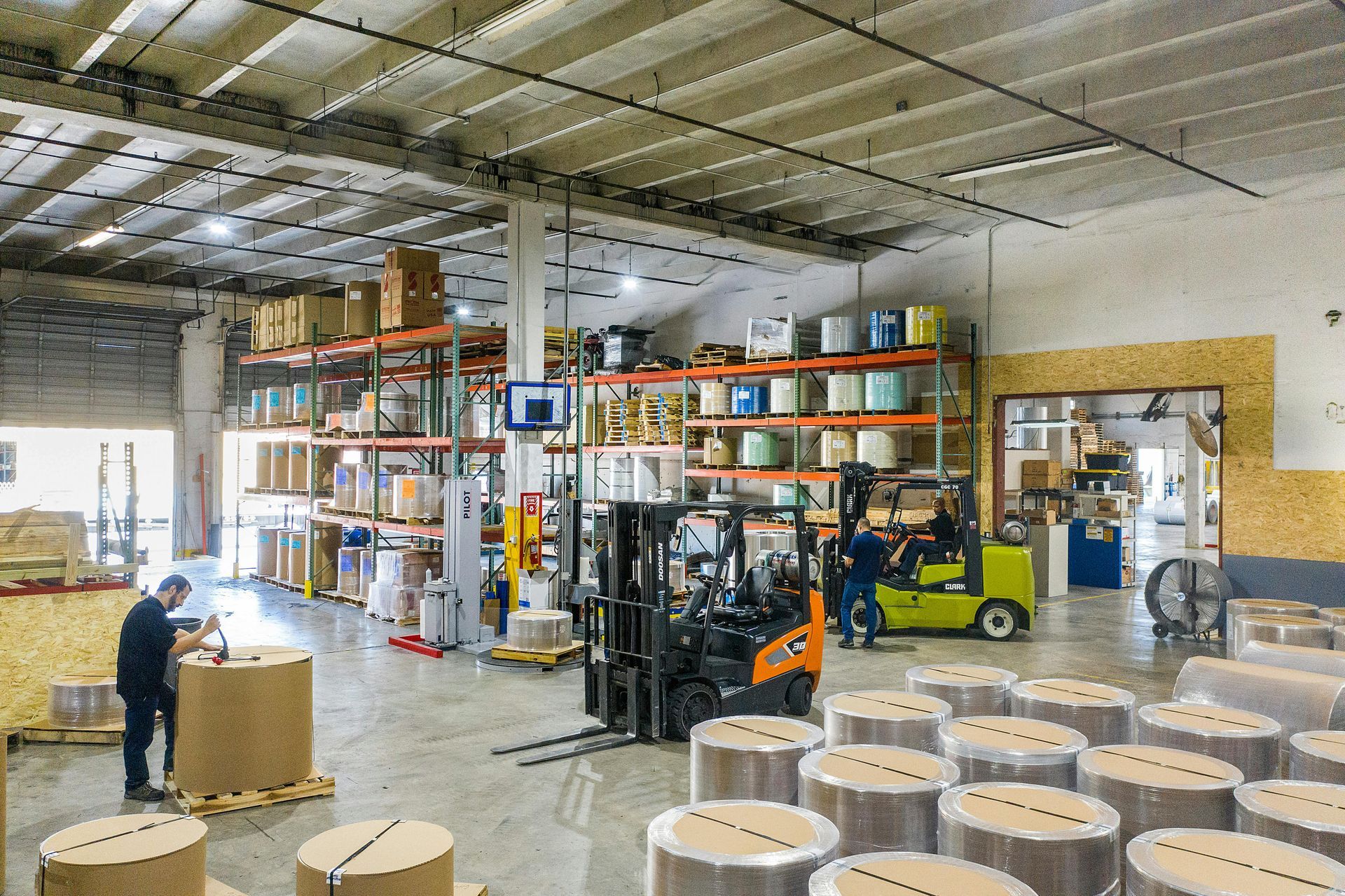
If you’ve ever wondered how all those online orders magically appear on doorsteps in time for Christmas, logistics is the answer. Every year, as Black Friday and Christmas get closer, warehouses and delivery services are flat out. Warehouse operatives, forklift drivers, delivery drivers, and supply chain coordinators? They’re all in huge demand.


This is where planning ahead really pays off. Companies that have skilled staff ready to go can glide  through the busy months, while those who don’t… Well, it gets a bit chaotic. At Regional Recruitment, we make sure businesses have people ready to step in when they need them, while helping candidates find roles that suit them perfectly, temporary, permanent, or somewhere in between.


Engineering, Commercial, and Construction Roles: The Unsung Heroes Behind the Scenes

It’s not just logistics that gets busy in autumn. Our engineering and commercial teams see a rise too and even construction plays a part, depending on seasonal projects. Engineers are in demand to keep projects on track, while commercial roles, especially in finance or operations, often need extra hands as companies wrap up their year-end accounts and budgets.


Construction may slow slightly in the colder months, but there’s still plenty of demand for skilled trades and project support to keep things moving. And again, being prepared makes all the difference. Companies with a pool of skilled, ready-to-work candidates can handle peak periods or project deadlines without stress.

For candidates, this is a golden opportunity to gain experience, step into roles that match their skills, or even secure a long-term position in sectors that continue to grow year on year.


What Makes Candidates Stand Out

So, what do employers actually want right now? Reliability and flexibility top the list. If you can turn up when needed and adapt to changing schedules or workloads, you’re already ahead. But that’s not all, technical skills matter too. Whether it’s operating machinery, handling deliveries safely, or understanding engineering processes, having the right know-how makes a big difference.


Soft skills are just as important. Teamwork, communication and a positive attitude can really set you apart. Employers notice candidates who can work well with others, take initiative, and stay calm under pressure especially during busy periods like autumn and the festive season.


It’s also worth thinking about attitude and motivation. Showing enthusiasm, willingness to learn, and a “can-do” approach often makes a candidate memorable. Employers are looking for people who don’t just fill a role, but who make the whole team stronger and more efficient.


At Regional Recruitment, we’ve seen it time and again: candidates who highlight both their practical skills and their soft skills get noticed faster, and businesses get the right people exactly when they need them. It’s a win-win. And the good news? These are things anyone can showcase on a CV, in an application, or during an interview.


Why Autumn is the Perfect Time to Jump In

Autumn isn’t just the start of the festive season, it's a season of opportunity. Logistics and industrial roles are busier than ever, which means plenty of openings for candidates and lots of support available for companies needing extra hands.


At Regional Recruitment, we’re ready to help. Whether you’re looking for your next role or your business needs skilled staff to handle the seasonal rush, we have the people and expertise to make it happen.



by Megan Coote • 2 October 2026
Scaling Teams for Q4: Recruitment Challenges in Fast Growing Commercial Businesses
by Megan Coote • 28 September 2026
Why Now Is the Right Time to Find Your Next Job, and How a Recruiter Can Help
by Megan Coote • 9 September 2026
Manufacturing and logistics have changed faster in the last decade than in the previous three combined. Automation, supply chain volatility, and tighter margins have raised the bar for what ‘experienced’ means. Years on the job still matter, but they’re no longer enough on their own. Here’s what gets experienced professionals noticed, promoted, and recruited.  Cross-functional fluency The days of staying in one lane, purely operations, purely procurement, purely quality, are fading. Employers increasingly value people who understand how their function affects the ones around it: • A supervisor who understands how scheduling decisions ripple into logistics costs • A logistics manager who understands upstream production constraints, not just downstream delivery windows • A quality lead who can speak the language of finance when justifying a process change Professionals who can translate across functions become the people leadership pulls into bigger decisions. Systems and data literacy Modern plants and supply chains run on data, ERP systems, WMS platforms, real-time tracking, predictive maintenance software. Employers consistently rank comfort with these systems above raw tenure. That doesn’t mean becoming a data scientist. It means being able to: • Pull and interpret your own performance metrics rather than waiting for a report • Spot a trend in downtime, throughput, or fill-rate data before it becomes a problem • Speak credibly in conversations about automation or digital transformation, even without owning the technical build Professionals who treat systems as a black box get left behind as more of the operation becomes visible in dashboards. A track record of solving problems, not just running them Anyone can describe their job. What sets experienced candidates apart is being able to point to specific problems they diagnosed and fixed, a bottleneck they eliminated, a safety incident rate they drove down, a vendor relationship they turned around. Employers are listening for cause and effect, not just responsibility. When describing your experience, favour concrete language: what was broken, what you changed, what the measurable result was. Vague descriptions of ‘overseeing operations’ carry far less weight than a specific before and after. Leadership under pressure, not just leadership on paper Titles like ‘supervisor’ or ‘manager’ don’t tell employers much on their own. What they’re evaluating is how someone leads when things go wrong: a line goes down, a shipment is delayed, a key operator calls out mid-shift. Employers pay close attention to: • How candidates describe decision-making during disruptions • Whether they take ownership of outcomes or default to blaming external factors • How they’ve developed the people under them, not just directed them Calm, decisive leadership during disruption is one of the most valued and hardest to fake traits in industrial roles. Adaptability to automation and process change Automation isn’t replacing experienced professionals; it’s replacing the ones who resist adapting to it. Employers want people who see new equipment, new software, or new processes as something to master, not something to tolerate. Signalling adaptability can be as simple as being able to speak to: • A time you learned a new system or piece of equipment quickly • How you helped a team adjust to a process change rather than just complying with it yourself This matters especially for professionals with 10+ years of experience, where employers sometimes (often unfairly) assume rigidity. Directly countering that assumption is worth doing explicitly. Safety and compliance ownership In manufacturing and logistics, safety isn’t a soft skill, it’s foundational to promotability. Employers consistently favour candidates who treat safety and compliance as something they actively manage, not something imposed on them. Concrete signals include: • Reductions in incident rates under your watch • Initiating safety improvements rather than just following existing protocol • Fluency in relevant regulatory requirements (OSHA, DOT, ISO, depending on the sector) This is one of the fastest ways to differentiate yourself for supervisory and management-track roles. Communication that works across the org chart Experienced industrial professionals often work with people ranging from floor operators to executives to external vendors. Employers value people who can adjust their communication style, explaining a technical issue plainly to a non-technical stakeholder, or making a clear business case to leadership for a capital investment. This is frequently the deciding factor between two similarly qualified candidates for a management track role: one can only talk to their peers, the other can talk to everyone. The bottom line Advancing in manufacturing and logistics today isn’t just about accumulating years or titles. Employers are looking for professionals who connect the dots across functions, use data instead of guessing, solve problems visibly, lead well under pressure, and stay adaptable as the industry keeps changing. Building and being able to clearly describe that track record is what turns experience into advancement.
by Megan Coote • 11 August 2026
The best salespeople and revenue operations professionals rarely need to look for a job. They’re already employed, already exceeding quota, and already fielding calls from recruiters. If you’re trying to hire them, you’re not filling a role, you’re competing for someone who has options. That changes how recruiting must work. Here’s what moves the needle.
by Lucy Billing • 1 June 2026
For many businesses, mid-year arrives with a familiar tension. The first half has been reactive, and the second half needs to be different. Whether you've been holding back on hiring decisions, watching turnover quietly climb, or simply haven't had the bandwidth to step back and look at the bigger picture, now is the moment to do it.  The organisations that finish 2026 strongly won't be the ones that waited for certainty before acting. They'll be the ones that made deliberate workforce decisions in the middle of the year, when there was still time to course-correct. This piece sets out the pressures that are shaping the employer landscape right now and what a proactive response to each of them looks like.
by Lucy Billing • 1 June 2026
The skills that secured a good commercial role a few years ago aren't necessarily the ones that will get you ahead in 2026. Across sales, operations, customer service, administration, and office leadership, employers are raising the bar, and the professionals who understand what's changed are the ones moving fastest. That's not a reason for concern. It's an opportunity. The commercial job market continues to offer strong prospects for ambitious candidates, and businesses are actively looking for people who combine technical confidence, commercial awareness, and strong people skills. If you're willing to develop in the right areas, the progression is there.  This guide breaks down the six skills employers are prioritising in 2026 and exactly how you can start building them.
by Lucy Billing • 11 May 2026
Manufacturing and logistics work look different from the roles people entered a decade ago. The idea that industrial work is repetitive, low-skilled, and limited in progression is becoming increasingly outdated, and if you're already working in the sector or thinking about entering it, that creates real opportunity.  Across warehousing, production, distribution, and supply chain operations, employers are investing heavily in automation, digital systems, and advanced machinery. The skills they value most are evolving quickly. And the people who build those skills are commanding stronger wages, better job security, and clearer routes into more senior roles. The industrial labour market is also under serious pressure right now. Employers across the UK are struggling to find people who combine operational experience with technical ability, flexibility, and reliability and that scarcity has real weight behind it. Businesses are increasingly willing to pay more, offer better conditions, and invest in training to attract and keep the right people. The employees seeing the strongest wage growth aren't necessarily the ones with the longest CVs. They're the ones who stay adaptable, pick up new skills, and make themselves harder to replace. This guide breaks down exactly which skills are paying more in 2026 and how you can start building them.
by Lucy Billing • 11 May 2026
The Problem Isn't Peak Season; It's How You Prepare for It
by Lucy Billing • 13 April 2026
If you're looking for construction jobs in the UK, timing matters more than most candidates realise. Here's why April 2026 is one of the strongest windows of the year to secure your next role and how to make the most of it. Q1 is where the construction plans are. Budgets are approved, projects are scoped, and hiring is discussed but rarely acted on. By April, that changes. S ites ramp up. Project timelines go live. Employers who spent January reviewing pipelines are now making offers on construction jobs that need to be filled immediately. Start dates that were theoretical in February become urgent by April. If you're searching for construction work in the UK in 2026, this shift matters. By the time summer arrives, the best construction roles are already filled, and the competition has grown significantly.
by Lucy Billing • 13 April 2026
Q2 Is Where Projects Accelerate